
News
A Piece of Europe on Campus: Erasmus+ Project on Sustainable Construction at the Eckert Schools
Students from six European countries came together at the Eckert Schools as part of the Erasmus+ project “The Green Way – Sustainable Building,” organized by FOSBOS Regensburg. A day of discussions, practical insights, and innovative approaches highlighted how sustainable construction can be developed and implemented collaboratively across Europe.
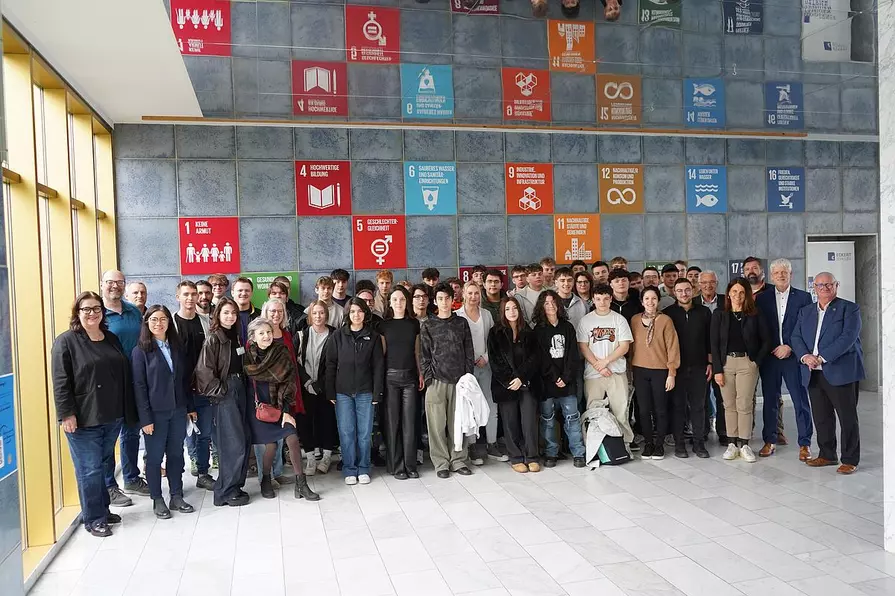
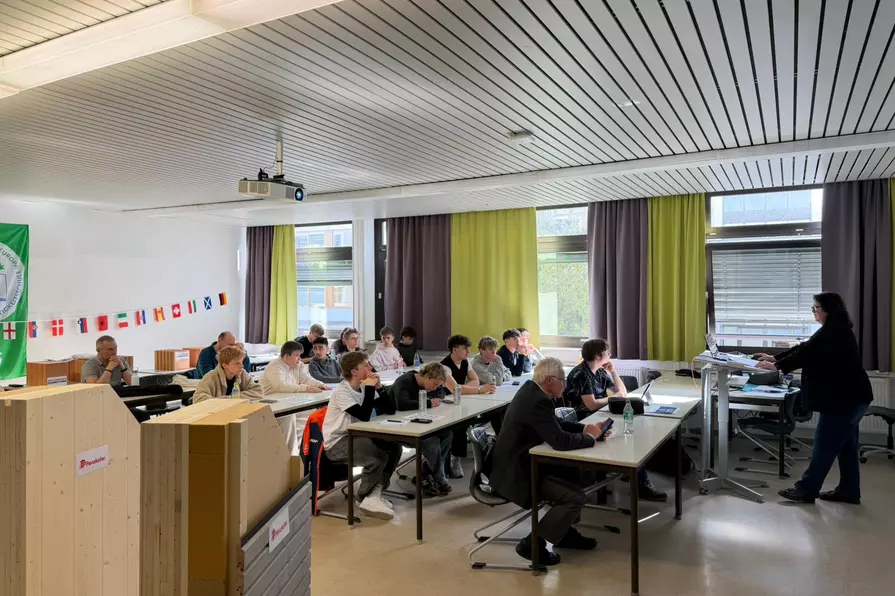
Sustainability in the construction industry is one of today’s key challenges: and at the same time a major opportunity for innovation and international cooperation. On March 12, 2026, around 50 participants from Belgium, Poland, Italy, Turkey, Austria, and Germany visited the Eckert Schools campus in Regenstauf as part of the Erasmus+ project.
The program offered valuable insights into sustainable building concepts through expert input, hands-on experiments, and interactive discussions. At the same time, it showcased how sustainability is integrated into everyday education and institutional initiatives at the Eckert Schools.
International Guests Welcomed to Campus
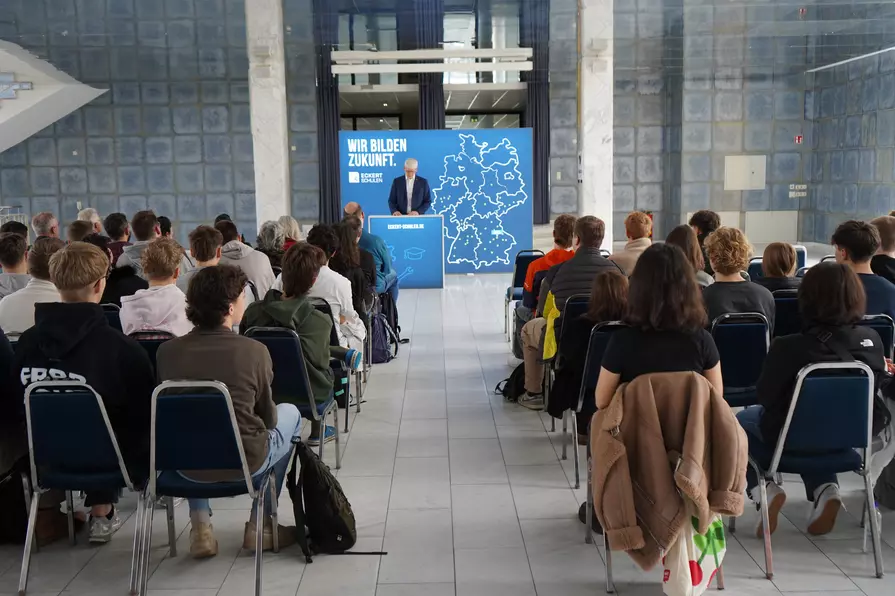
The event began with an official welcome in the Spiegelaula by Principal Markus Johannes Zimmermann. Addressing the international group, he emphasized the significance of the gathering:
“Just take a look around. We have gathered a piece of Europe in one room. The only borders that truly separate us are the borders in our minds. If we tear down those walls, we can become strong, innovative, and above all independent together in Europe.”
The week-long Erasmus+ program, organized by FOSBOS Regensburg, focused on sustainable construction. As part of this initiative, the Eckert Schools hosted a dedicated project day, offering a diverse and engaging program for the international guests.
Sustainability at the Core of Education
Through presentations and expert talks, Gerald Saule, Head of Vocational Training International, introduced participants to the Eckert Schools, the work of Eckert Schools International, and the wide range of sustainability initiatives on campus.
The sessions demonstrated how deeply sustainability is embedded in everyday educational practice. As both an “Environmental School in Europe” and a “STEM-friendly school,” the Eckert Schools focus on modern, digital learning concepts and a variety of sustainability-driven initiatives.
Examples include the FairSchenkladen, the Sandarium, and specialized courses dedicated to sustainable development. In addition, sustainability is firmly anchored in the institution’s structures for example, through an energy management system certified to ISO 50001 and an environmental management system aligned with ISO 14001.
Annual initiatives such as Sustainability Day, along with energy representatives in every class, ensure that environmental awareness remains a constant part of school life.
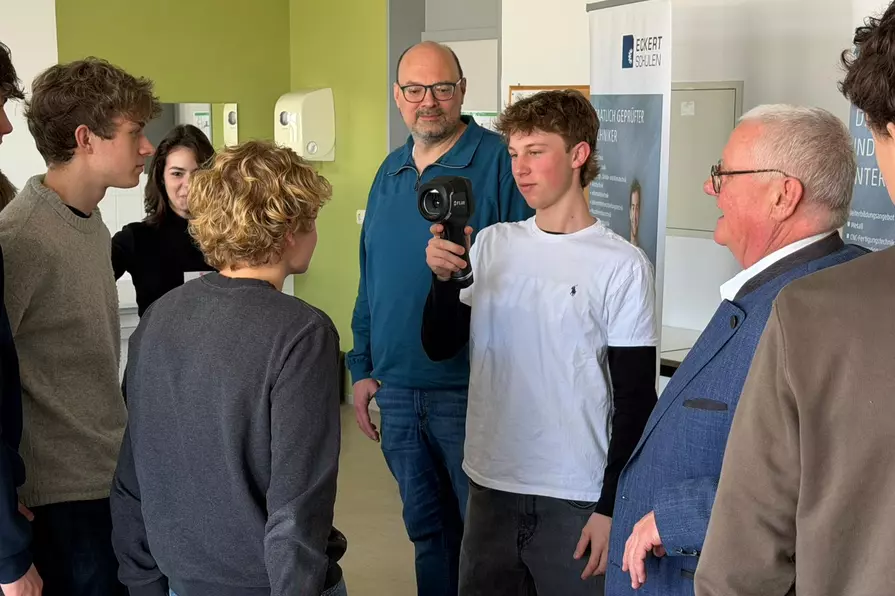
A particular highlight was a hands-on activity using a thermal imaging camera. Participants analyzed a classroom to identify heat sources and better understand energy efficiency. By examining people, radiators, laptops, projectors, and windows, they gained practical insight into the importance of insulation and energy management in sustainable construction.
Workshop: Exploring Sustainable Construction Methods
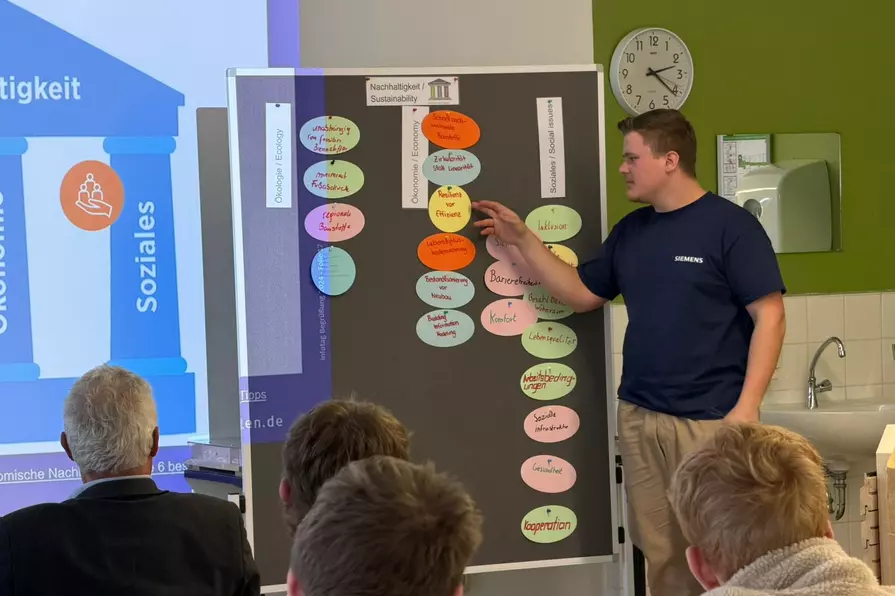
Building on these practical insights, participants took part in a workshop led by Susanne Biek, Head of the Construction Department. The session focused on key aspects of sustainability and environmental responsibility in the construction industry.
Topics included holistic planning approaches, life-cycle-oriented construction, and the responsible use of resources. Using real-world examples, participants explored why sustainable construction is becoming increasingly important particularly in relation to CO₂ emissions, resource consumption, and growing waste volumes.
The discussions also highlighted that sustainability extends beyond the construction phase itself. Careful planning for demolition and reuse is just as essential as the design and building process. Additional topics included urban mining, passive housing, sustainable insulation materials, and innovative approaches to concrete construction.
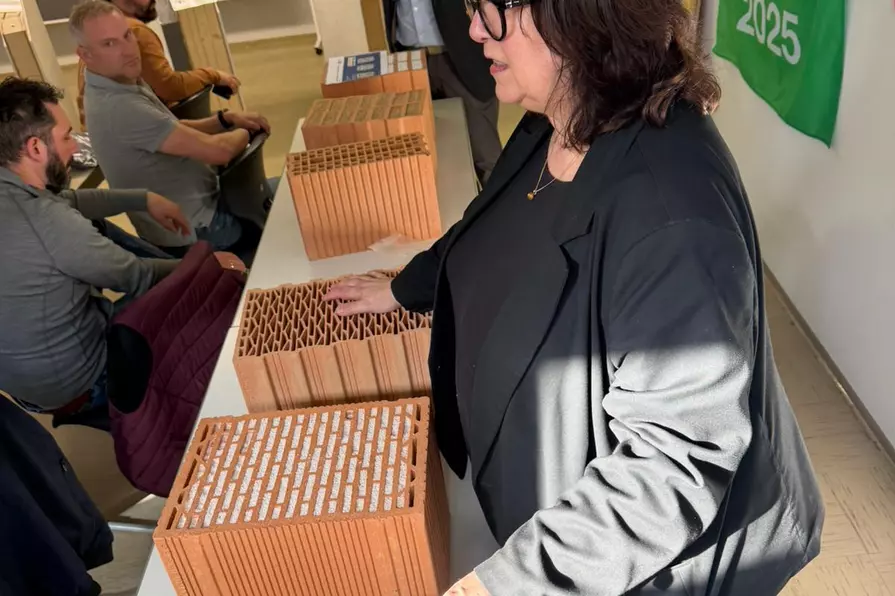
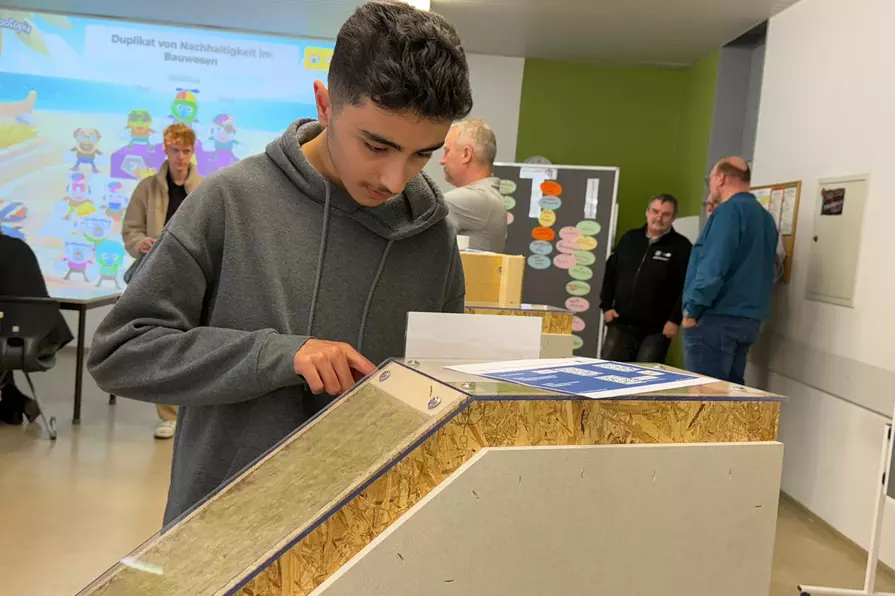
A hands-on component allowed participants to work directly with building materials. With support from partner companies, they explored different materials such as bricks and wooden components in a practical setting.
Special thanks go to Penzkofer Bau, Schlagmann Poroton, Haas Fertighaus and Wolf System for providing materials and supporting the workshop.
backContact
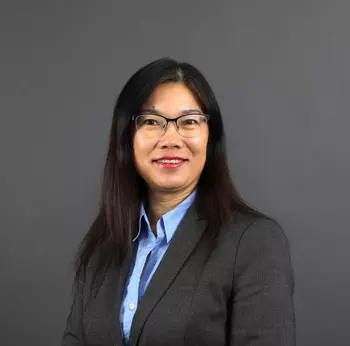
Hua Lei
Senior Project Manager International
Phone +499402502-158
Fax +499402502-6158
hua.lei@eckert-schools-international.com
Share